How to choose a bulb that will illuminate the room well? How to choose the power of a bulb?
Over the last few years, quite a revolution has taken place in the lighting industry, which has turned our purchasing behavior upside down. The traditional, energy-consuming light bulb is becoming a thing of the past. Now more efficient, lower-maintenance and energy-saving LED bulbs are taking over. We have some tips that will help you choose the right bulb for the room. By following them, you will avoid overly intense workouts or those that simply cause you to get tired quickly. Knowing what light bulbs you buy and in what circumstances you use them can change a lot in your life! Hard to believe, but still.
Here are some tips to help you get the right one lighting for various rooms in the house, both in terms of modern ceiling lamps, floor lamps and all kinds of lighting points.
- Lighting - where to start when looking for the right bulb?
- How to choose the power of a bulb for a room?
- Popular categories of lamps at bihome.pl
- Popular categories of glass lamps at bihome.pl
- How to choose the power of the bulb according to the type of fixture and the function of the lamp?
- LED bulbs – which one to choose?
- Bulb brightness
- How to convert the power markings on LED bulbs?
- How to convert brightness markings on LED bulbs?
- Color temperature – CRI index.
- Appropriate bulb shape, thread, etc. Not only color and brightness are important.
- Which LED bulbs should you choose? - summary
Lighting - where to start when looking for the right bulb?
It's important to start by thinking about what you want the space to look like. And how you want to feel in it. Think about what is happening in this particular room, what functions it serves and when you feel best in it. Think about your space and choose light bulbs that complement its purpose. This reflection should influence which light bulbs or even which lighting fixtures you should choose. When it comes to fixtures, in our online store bihome.pl you will find ones that you can easily match to the style of your room. Ceiling lamp sconce Whether standing lamp a light bulb is an extremely important element that affects the final impression of a specific room. A properly selected bulb will ensure that the lamp will fulfill its function and will also influence the perception of the fixture itself, which will complement the appearance of the interior.
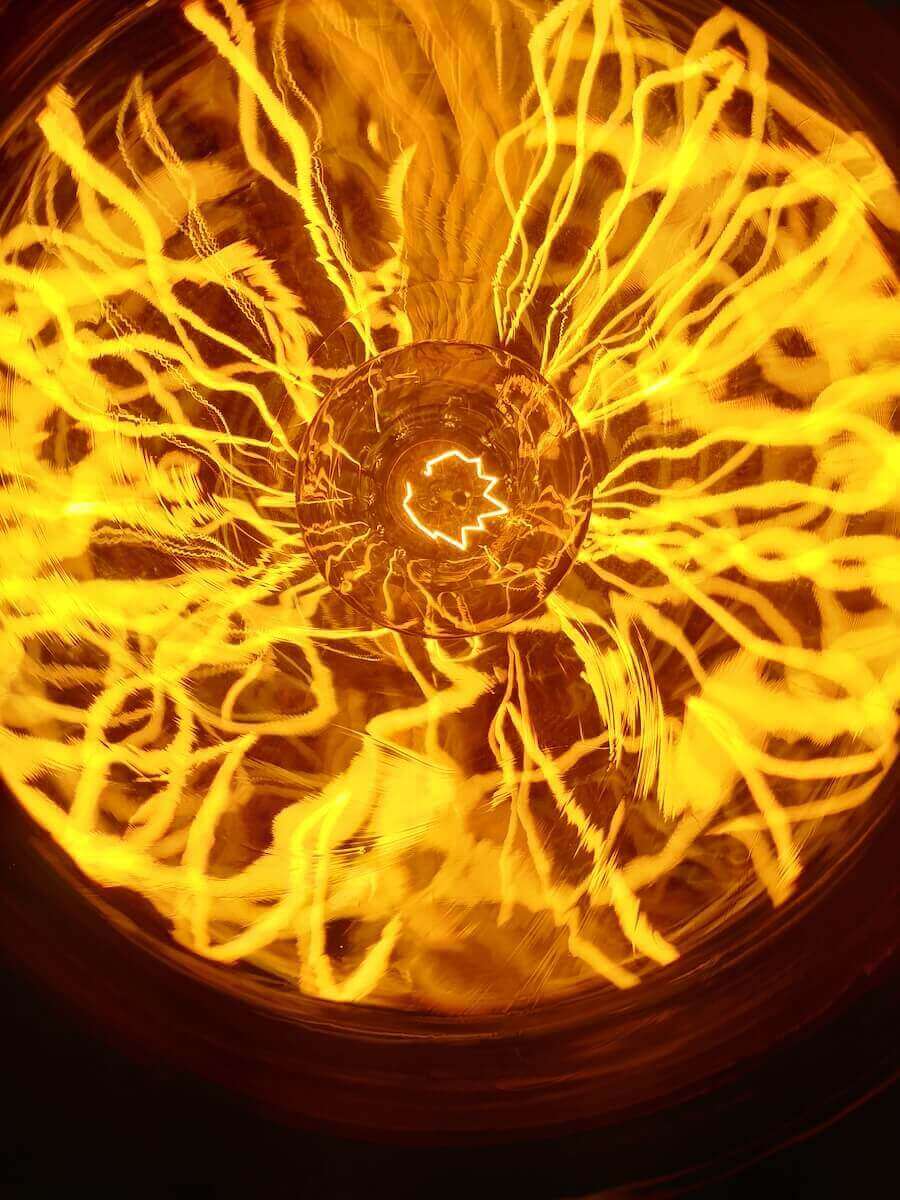
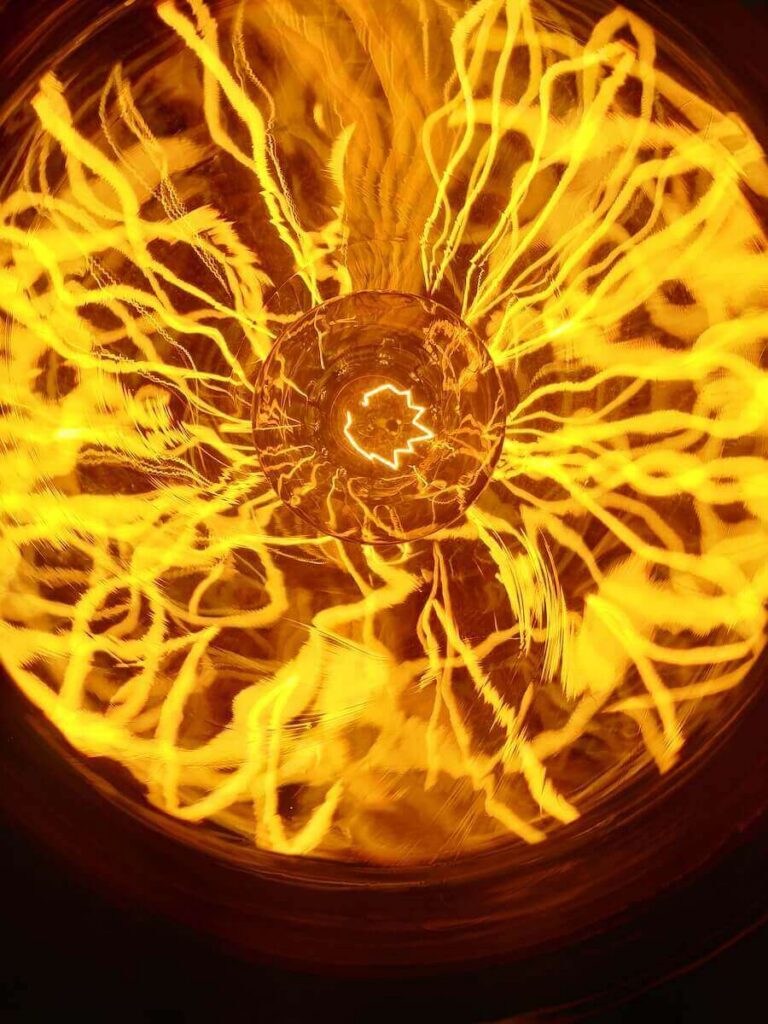
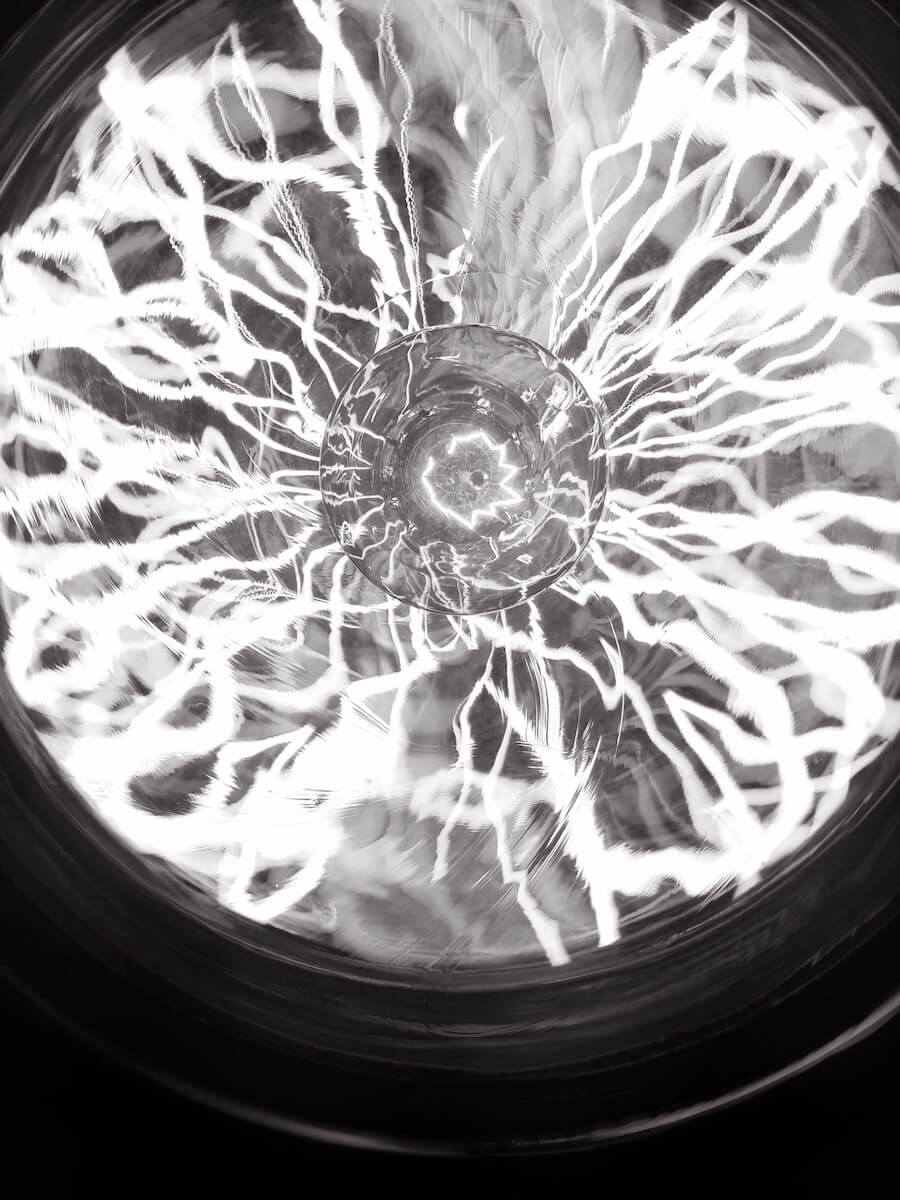
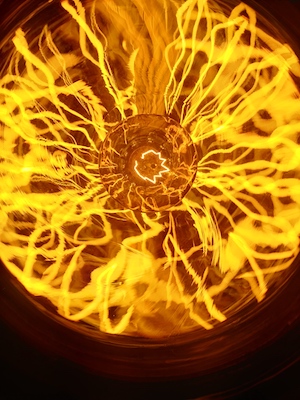
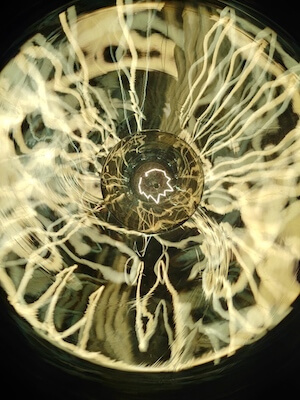
The photo shows a view of the lamp Rowan from EBB&Flow lit in our office with a warm, traditional 60W bulb installed in it.
How to choose the power of a bulb for a room?
When you are sitting on the sofa in the living room and relaxing with your family members, you are not interested in bright lights shining directly on your face. So in the living room you will look for soothing and subdued light. If it is possible to adjust its intensity, even better! But in the kitchen, you'll want to be able to flood the space with light. This is a workplace where you want to see everything clearly. What if you like the black lamps for the hall or the ceiling lamps for the living room and you don't quite know which bulb to install?
Popular categories of lamps at bihome.pl
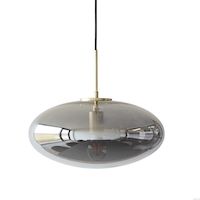
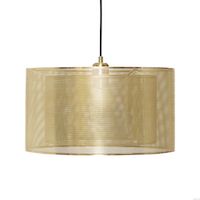
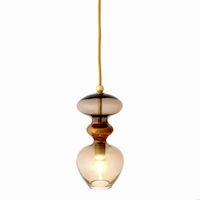
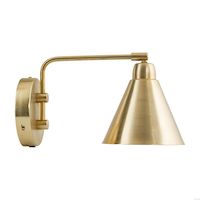
When picking up a specific light bulb, you should first check the energy class (A is the highest, and each + symbol increases this class). The higher, the better, of course. Secondly, it is worth specifying what kind of bulb we are looking for? Let's start with the functions and the well-known scale of traditional light bulbs, and so on:
1/ peace or v living room – depending on the size, you may need up to 200W in total to illuminate a fairly small living room (from all the bulbs in the room):
a/ głównym źródłem światła są zazwyczaj hanging lamps – ich moc powinna wynosić około 75W;
b/ desk or standing lamps, especially those for reading, must have at least 40W, and the bulbs should provide diffused light;
c/ wall lamps, e.g. wall lamps, it is enough if they have sources with a power of up to 25W;
d/ night lamps should provide a subtle, warm light, approx. 10-20W.
2/ dining room – if you choose hanging lamps for the dining room – e.g. a light bulb lamp or a light bulb hanging lamp, both proposed by the Danish company from Hubschthat will allow for adequate illumination of the space in this room, they should have a total power of 60W or more;
3/ children's rooms, just like in the living room, it is worth installing several light sources with a total power of 100+W:
a/ quite powerful, even about 60W at the top, for fun,
b/ desk lamp about 40W;
c/ night lamp about 15W.
3/ kitchen, you will need at least one light source with a power of 40-60W;
4/ bathroom, a spotlight with a power of 25-40 W is enough. Alternatively, you can also consider a separate ceiling lamp with a power of about 40-60 W, which will help when washing or cleaning.
Popular categories of glass lamps at bihome.pl
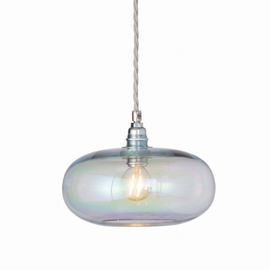
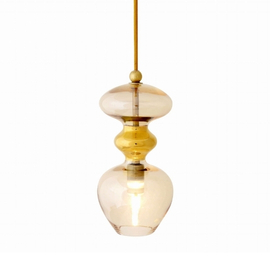
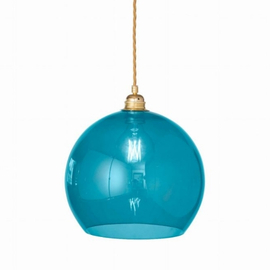
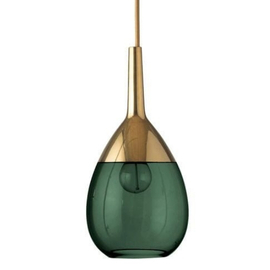
How to choose the power of the bulb according to the type of fixture and the function of the lamp?
It is worth remembering that the above should also be corrected depending on the type of fixture and the type of lamp. A wicker floor lamp, for example, will require a different bulb wattage than an incandescent ceiling lamp, which plays a more functional role. As for the type of lamp, approximately, about 400 lumens is suitable for table lamp, and for hanging lamps it may be reasonable to use these brightest bulbs. Therefore, regardless of whether it is a floor lamp or a hanging lamp, well-matched bulbs will create a stylish, balanced, functional and unique interior!
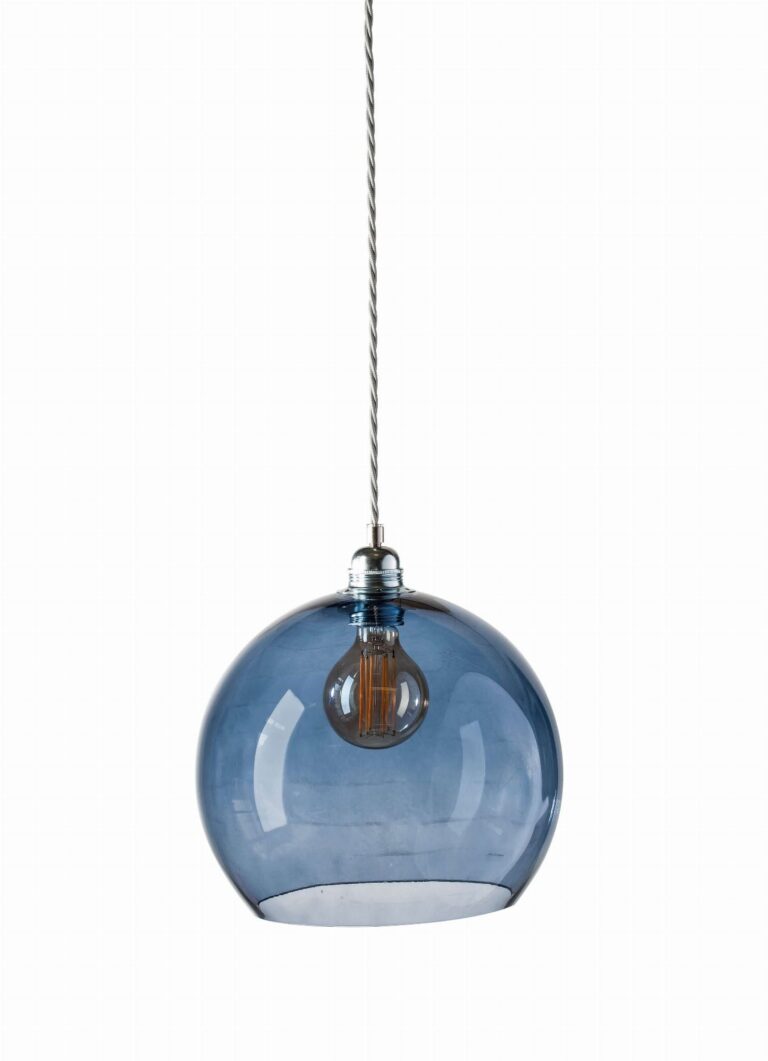
Take into account the selected lighting fixture, no matter whether it is a copper lamp proposed by It's About Romi or a glass hanging lamp from EBB&Flow – in our online store you will find such and such and many other designer products. And always consider the brightness and color of the light emitted by the bulb in the context of the specific fixture.
LED bulbs – which one to choose?
First, ask yourself what type of light you need in your home, in each room. Your decision very often comes down only to brightness and color, or in other words the color of light. What is the difference between brightness and color? Here is a short explanation.
Bulb brightness
In the past, everything was easier because the main determinant of a light bulb was its brightness. Interestingly, it is measured in watts, which is interesting because in fact a watt is a measure of power, not brightness. At that time, there was no problem finding the right product because there was one scale, well known to everyone. When you needed a lot of light, you simply used a 100-watt bulb. And for the proverbial basement, probably 40W. Since the introduction of energy-saving light bulbs, watts have become a less useful measure of brightness because new bulbs use much less energy to produce the same amount of light. Instead of watts, which still confuses many, light output, or brightness, is measured in lumens (lm). The higher the value, the brighter the light. However, new measurements continue to make it difficult for many people to judge the suitability of a light bulb.
How to convert the power markings on LED bulbs?
Once we know what power of the bulb we are looking for, it remains a matter of properly calculating the power for a specific bulb. And here's a note! Please remember that the power expressed in watts for different types of bulbs may lead to wrong choices. It is worth remembering the conversion factors that apply to:
1/ LED bulbs are approximately 6;
2/ fluorescent lamps approx. 4.6;
3/ halogens approx. 1.3.
This means that when choosing a 20W LED bulb, we actually get a light source with a power of 20×6, i.e. even over 100W.
How to convert brightness markings on LED bulbs?
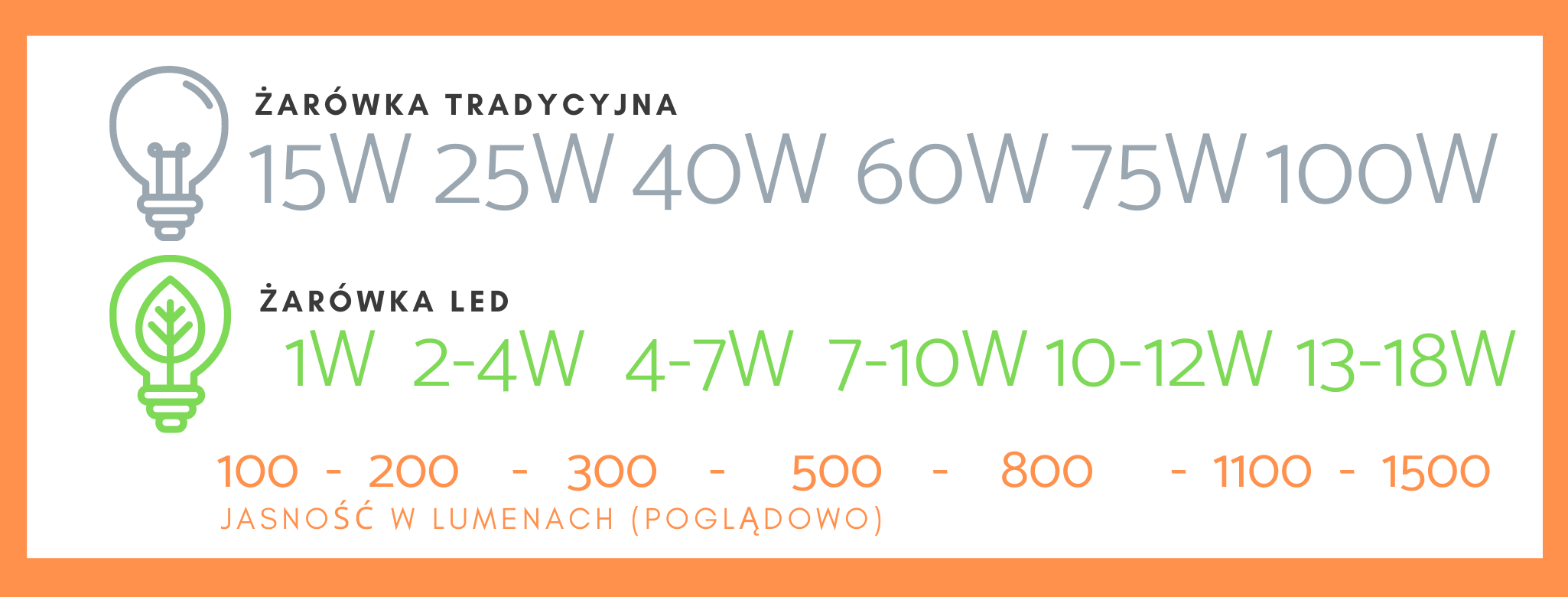
As for the current measurement of light bulb brightness on packaging, i.e. lumens, it can be roughly translated into the power of traditional light bulbs as follows:
1/ 100-150 lm (exactly 136 lm) corresponds to a traditional 15W bulb;
2/ 220-250 lm (249 lm) – 25W;
3/ 410-470 lm (470 lm) – 40W;
4/ 700-810 lm (806 lm) – 60W;
5/ 920-1.100 lm (1055lm) – 75W;
6/ 1,100-1,600 lm (1521 lm) – 100W.
These are indicative data and are intended to show approximately which modern bulb will best fill the place of the previously used traditional bulb with a tungsten filament.
Summary – make friends with LED bulbs, because there is no going back to traditional ones
To simplify the bulb selection process and to summarize the above considerations, we have prepared the infographic below. It allows you to compare the current measure provided by manufacturers, i.e. the brightness of the bulb in lumens, to the well-known measure in watts for both traditional and LED bulbs.
When looking for warm, yellow light, we should look for light that is about 2,700 degrees Kelvin, up to a maximum of 3,300K. For comparison, the color temperature of sunlight at summer noon is about 5,000K, and a candle emits light with a color temperature of about 1,600 degrees Kelvin.
Not everyone realizes it, but the color of light affects a lot, starting from our mood and well-being, to the color of vegetables we see on the cutting board, and how we evaluate its freshness and taste. Therefore, it is important to consciously select both the power and color of light. This is important when it comes to lamps above the dining table, but also to all other lamps. The right choice of light color will also make it lamp it will look better. A carefully selected bulb will highlight and present a chandelier of any kind much better.
Color temperature – CRI index.
If you think it's over, it's not. In addition to brightness and color, each bulb has an additional CRI index (CRI). color rendering index). Generally speaking, it means the quality of color rendering by a specific bulb. Therefore, it is a measure of the ability of a given light source to accurately reproduce various colors. Simply put, in the kitchen you want to make sure you install a light bulb that will make your tomatoes appear red on the cutting board, rather than, say, orange or brown. The closer the CRI is to 100, the better. Traditional incandescent and halogen bulbs are close to CRI 100. As for LED bulbs and compact fluorescent lamps, they will have it around 80. However, this level of CRI is still considered acceptable, but it proves that such light sources distort colors to some extent. This is worth remembering.
Appropriate bulb shape, thread, etc. Not only color and brightness are important.
Now that you know what color bulb and what brightness you need in your rooms, you also need to decide which bulb shape you will like. And most importantly, which one will be suitable for the lamp you choose. If you are replacing a burnt out bulb, you can simply replace it with the same bulb. You can take the used model to the store and let experienced employees help you choose a replacement. If you have new ones hanging lamps for the living room, hanging lamps for the kitchen or other rooms or you have simply decided to switch to energy-saving LED bulbs, it may be necessary to choose a different shape of the bulb than before. The choice of bulb shape can also be important. Especially when the lamp is such that the bulb is visible.
Each of the different shapes provides slightly different radiation and angle of incidence of light. From almost 360-degree dispersion to a narrow, directional beam. Generally speaking, the shape you choose can be based on your personal preferences and what looks best in a particular setting.
Selected furniture and lighting for this interior
 EBB & FLOW
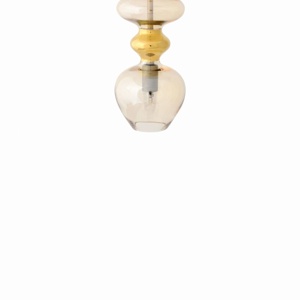
Futura lamp base golden smoke gold base
diameter 18cm 46cm height
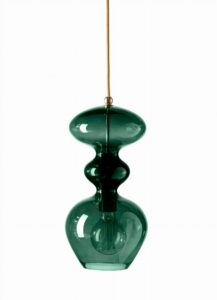 EBB & FLOW
Lampa Futura Ivy-Green Ø18cm szkło Ebb&Flow
Seria lamp Futura Ø18 obejmuje zarówno lampy wiszące oraz lampy stołowe na biurko....
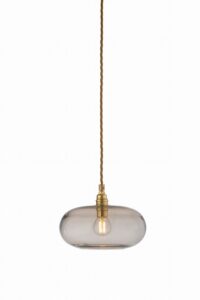 EBB & FLOW
Horizon lampa wisząca śr. 29cm chestnut brown
diameter 29cm 20.5cmD
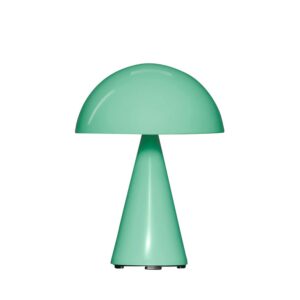
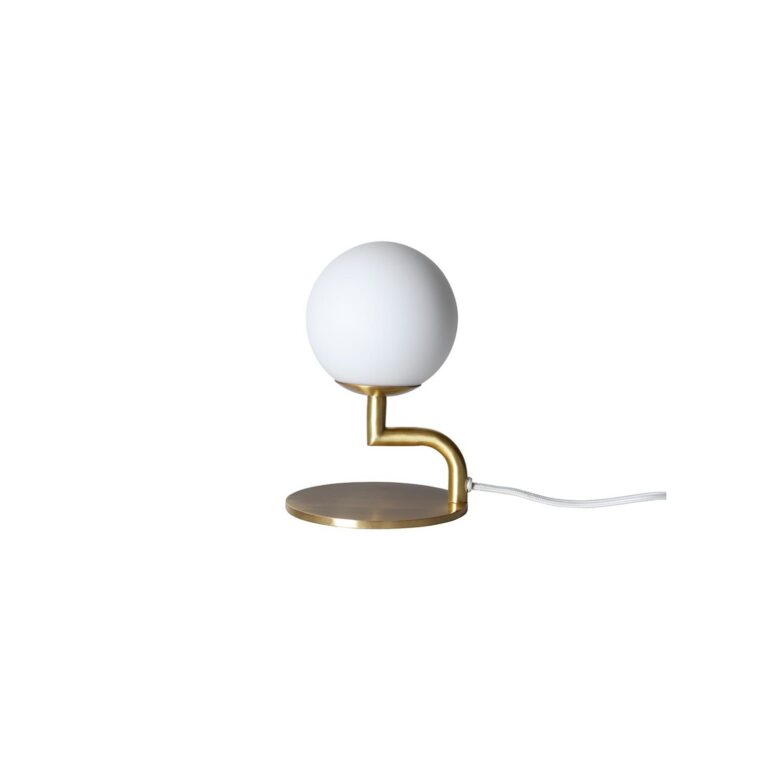
Lampa przenośna Mush Green Hubsch
Introducing the portable Mush lamp - a modern take on the iconic design, now in...
Also pay attention to the bulb thread, usually it is either E27 or the smaller E14. However, checking this small detail can save you the effort of replacing a bulb.
One of the changes taking place in lighting today is that some new fixtures are equipped with integrated light sources, such as individually designed LEDs, which do not need to be replaced. In such a setting, we cannot change anything when it comes to the nature of the light, its color and brightness. Check this carefully before purchasing, because you definitely want to be sure that you will be satisfied with the light emitted by such devices.
Which LED bulbs should you choose? - summary
It cannot be denied that LED bulbs have a number of unquestionable advantages. They last longer, are less prone to failure, provide an effective light source, and also save electricity, which translates into lower electricity bills. However, choosing the right LED bulbs for a specific room may not be so easy, especially since there are many different types of this product on the market with different power and color of light. We hope that our comprehensive guide will help you

Bihome.pl store
EBB&FLOW lamps – original Danish design
Hand-blown glass. Authorized distributor in Poland.
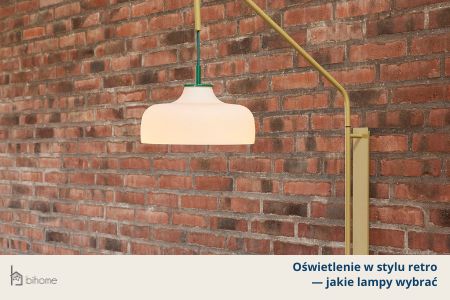

You might also be interested in:
- Now that you know how to choose the perfect light bulb, use this knowledge to find out How to create a cozy interior for winter?
- Appropriate lighting is the key to a functional interior, especially when planning Arrangement of a small hall | What to pay attention to when arranging a small hall.
Do you want to support our development?
We run this blog out of passion for beautiful interiors and good lighting. We do not publish sponsored articles and all opinions presented are 100% independent. If you want to support us, shop in our store bihome.pl or use our referral links when choosing add-ons. For you it's exactly the same cost, and for us it's a chance to create more articles in our free time. Thank you!